SpaceX IPO 2026: Starlink, Starship & the Future of Space Investing



Navigate to
- The Evolution of SpaceX and the Case for 2026
- Market Impact: Starlink as the Primary Catalyst
- Capital Allocation and the Future of Starship
- Regulatory Hurdles and Geopolitical Risks
- What an IPO Means for Institutional Investors
- Conclusion
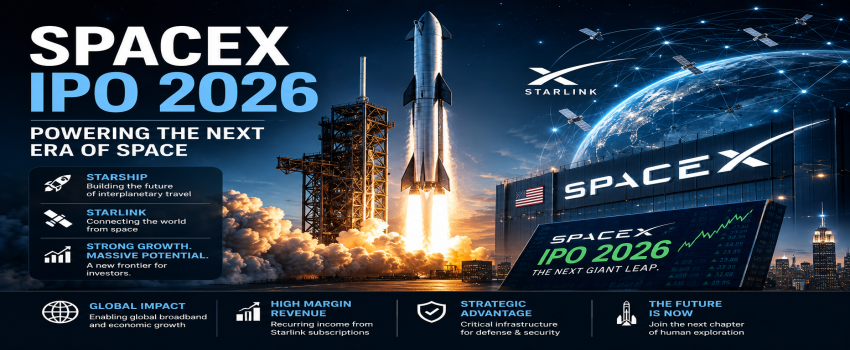
The rumors surrounding a potential SpaceX Initial Public Offering (IPO) in 2026 have intensified, signaling a potential shift in the paradigm of the private space sector. As Elon Musk’s aerospace giant continues to dominate launch cadences through the Falcon 9 and Starship programs, the prospect of public ownership invites scrutiny from institutional investors, geopolitical analysts, and tech enthusiasts alike. If SpaceX transitions from a private entity to a publicly traded powerhouse, it will likely represent the largest capital market event in the history of the commercial space industry, fundamentally altering how we value orbital infrastructure and interplanetary ambition.
The Evolution of SpaceX and the Case for 2026
SpaceX has spent the better part of two decades disrupting the traditional aerospace model. By successfully verticalizing the manufacturing process and pioneering the reuse of orbital-class rockets, the company has effectively neutralized the primary barrier to entry in space: cost. As of 2024, SpaceX holds a near-monopoly on Western launch capacity, making it a critical asset for national security and global telecommunications.
The 2026 timeline is not arbitrary; it aligns with several key milestones in the company’s roadmap. By mid-2026, the Starship vehicle—the most powerful launch system ever built—is expected to have transitioned from experimental test flights to a fully operational, high-cadence transport system. Concurrently, the maturation of the Starlink constellation will likely place the company in a position of consistent, high-margin profitability.
The Shift from R&D to Revenue
For years, SpaceX operated as a capital-intensive research laboratory funded by venture capital and private equity. An IPO in 2026 would signal that the firm has matured into a "blue chip" technology company. This transition is essential for the long-term sustainability of the company’s ultimate goal: the colonization of Mars. Public markets provide access to deep liquidity, which will be necessary to fund the massive infrastructure required for deep-space logistics.
Market Impact: Starlink as the Primary Catalyst
While the launch business (Falcon 9/Heavy) is the backbone of SpaceX's reputation, Starlink is the engine of its future financial valuation. Starlink is arguably the most ambitious telecommunications project in history, aiming to provide high-speed, low-latency internet to every corner of the globe.
Why Starlink Drives Valuation
Starlink’s value proposition is distinct from traditional aerospace. It is essentially a global ISP (Internet Service Provider) that operates in space. If SpaceX decides to spin off Starlink or go public with the entire entity, investors are essentially buying into a recurring revenue model.
- Global Scalability: Unlike terrestrial broadband, Starlink is not constrained by geography, making it highly valuable in emerging markets.
- Military and Government Contracts: The military utility of Starlink in contested environments has made it a central pillar of modern defense strategy.
- Low Maintenance Requirements: Once the constellation is fully deployed, the operational overhead per unit of data decreases significantly.
The IPO of SpaceX would likely be priced based on the convergence of these two business units: the "Launch-as-a-Service" arm, which provides reliable cash flow, and the "Starlink" arm, which offers exponential growth potential.
Capital Allocation and the Future of Starship
The development of Starship is an unprecedented capital drain, but it is also the company’s greatest competitive moat. For a publicly traded SpaceX, capital allocation will become the primary focus of shareholders. Investors will want to know how the company balances the immediate profitability of satellite broadband against the high-risk, high-reward nature of Martian exploration.
The Cost of Deep-Space Ambition
Historically, public markets are hesitant to fund projects with timelines spanning decades rather than quarters. To successfully maintain an IPO, SpaceX leadership will need to communicate a clear roadmap that demonstrates how Martian logistics, lunar landings, and Point-to-Point (P2P) Earth travel contribute to the bottom line.
• Lunar Economy: NASA’s Artemis program and the associated contracts for lunar landers represent significant near-term revenue.
• P2P Transport: The potential to transport cargo or passengers across the globe in under an hour via Starship is a multi-trillion-dollar market waiting to be unlocked.
Regulatory Hurdles and Geopolitical Risks
A public SpaceX faces unique challenges that private companies are often insulated from. Regulatory scrutiny, particularly from the FAA, FCC, and international bodies, will intensify once the company is subject to SEC reporting requirements.
The Geopolitical Tightrope
SpaceX is a dual-use company. Its technology is used for scientific exploration, commercial telecommunications, and sensitive national security missions. As a public company, SpaceX would be under constant pressure from international stakeholders who may view its dominance as a threat to domestic space programs.
Furthermore, the influence of Elon Musk himself remains a variable. Public company shareholders often demand stability and predictability—traits that are sometimes at odds with Musk’s disruptive, high-velocity management style. Transitioning to a public structure will require a delicate balance between maintaining the company’s agile, "move fast and break things" culture and the rigid governance expectations of the New York Stock Exchange or NASDAQ.
What an IPO Means for Institutional Investors
For institutional investors, a SpaceX IPO would be a "must-own" asset. The space sector is currently underserved in public markets, with most available stocks focusing on legacy aerospace contractors that lack the agility and technological edge of SpaceX.
Reclassifying the Aerospace Sector
SpaceX entering the public domain would force a revaluation of the entire sector. Companies like Rocket Lab, Virgin Galactic, and various satellite manufacturers would suddenly have a benchmark against which their own performance is measured. This would likely lead to increased consolidation within the industry, as smaller players attempt to build scale to compete with the new market leader.
Institutional interest will likely focus on:
1. Margin Expansion: How quickly can launch costs be reduced through complete reusability?
2. Market Share: Can SpaceX maintain its dominance as competitors like Blue Origin and ULA increase their launch cadences?
3. Governance: Will the voting structure allow Musk to maintain control, or will public shareholders demand a more traditional corporate governance model?
Conclusion
The potential SpaceX IPO in 2026 stands as a watershed moment for the commercial space industry. By transitioning into a publicly traded company, SpaceX will move from being a visionary private enterprise to a foundational pillar of the global economy. While the risks associated with regulatory oversight and capital-intensive exploration are significant, the financial rewards for shareholders—and the technological progress for humanity—are unparalleled. For investors and industry observers, the next two years represent a critical window to understand the mechanics of this transition and the long-term potential of a space-based economy.
Frequently Asked Questions
1. Why would SpaceX choose to go public in 2026?
The 2026 window is projected to be a period where Starlink is fully operational and generating consistent free cash flow, and Starship is moving into a phase of routine operations. Going public at this stage allows the company to secure the massive, multi-billion-dollar capital injection required to scale Mars-related infrastructure.
2. Will Elon Musk retain control of SpaceX after an IPO?
It is highly probable that SpaceX would utilize a dual-class share structure, similar to other tech giants like Meta or Alphabet. This would allow Elon Musk to retain voting control, ensuring that the company’s long-term mission of interplanetary colonization remains the priority over short-term quarterly earnings.
3. How would a SpaceX IPO impact other space companies?
A SpaceX IPO would likely create a "rising tide" effect for the industry, bringing increased investor attention and capital to the space sector. However, it would also put intense pressure on smaller competitors to prove their profitability and technological viability, likely triggering a wave of mergers and acquisitions.
4. Could an IPO hinder SpaceX's "move fast and break things" culture?
Going public introduces rigorous reporting requirements and increased scrutiny from regulators and activist investors. Balancing this with the need for rapid, iterative testing and hardware failure—which are central to SpaceX’s success—will be the primary management challenge post-IPO.
5. What is the primary revenue driver for SpaceX heading into 2026?
While launch services for commercial and government satellites remain steady, Starlink is the primary growth engine. As global satellite broadband adoption grows, the recurring subscription revenue from Starlink is expected to dwarf the revenue generated from individual rocket launches.

Nexevo Technologies is a Professional web designing and web development company bangalore, which is offers a full facility for designing a website at a reasonable price. We are award-winning web design and digital marketing company working since 2012.
Share with







 Call
Call Whatsapp